
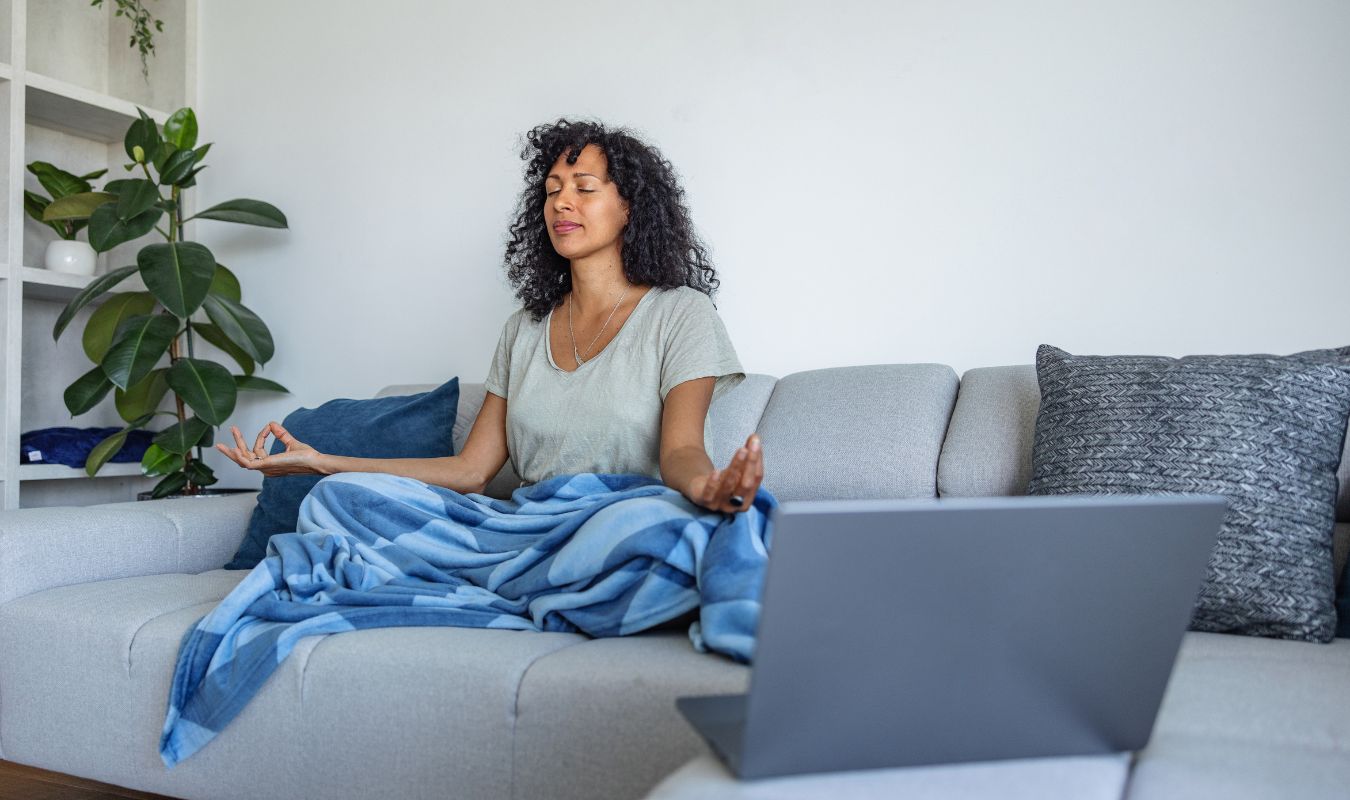
| A meditation position is any posture that allows you to hold two qualities simultaneously: alert enough to focus, and relaxed enough to stay. The spine is the key variable — an upright, unslouched back keeps the nervous system engaged without creating the tension that distracts from practice. There is no single correct position. The right one is the one your body can sustain long enough to actually meditate. |
KEY TAKEAWAYS
| What matters most | An upright spine, not a specific pose. Cross-legged on the floor and seated in a chair are equally valid |
| The two requirements | Alert enough to focus + relaxed enough to stay. Any position that gives you both is a good meditation position |
| Floor positions | Easy pose, Burmese, half lotus, full lotus — suited to people with hip flexibility and no knee issues |
| Chair position | The most underrated option. Correct chair sitting is as effective as any floor posture |
| Lying down | Works for body scan; high risk of sleep for other practices. Use it intentionally, not by default |
| Physical discomfort | Dull ache and pressure are workable. Sharp or shooting pain is a signal to adjust immediately |
The single most common reason people quit meditation in the first two weeks isn’t distraction or boredom. It’s physical discomfort. They sit cross-legged on the floor because they’ve seen pictures of people meditating that way, their knees ache within five minutes, and they conclude that meditation requires a flexibility they don’t have.
This is one of the most persistent myths in meditation practice. Posture matters — but the specific shape of it matters far less than most people assume. The Buddha described four valid meditation positions: sitting, standing, walking, and lying down. No hierarchy. No correct one.
What every position does need to give you is a spine that’s upright without being rigid, and a body that’s relaxed without collapsing. Everything else is variation. Here’s every option, who each suits, and how to make any of them work.
The Two Things Every Meditation Position Needs
Before choosing a position, it helps to understand what you’re actually trying to achieve physically. The goal is what neuroscience calls relaxed alertness — a state where the nervous system is calm enough to sustain attention without drifting into drowsiness.
A 2024 study published in PubMed confirmed that mindfulness meditation induces exactly this state — characterised by specific changes in neural oscillations and reduced sympathetic arousal. Your posture is what creates the physical conditions for that state to be accessible.
The two requirements:
- Alert enough to focus: the spine needs to be upright and unslouched. Slouching compresses the diaphragm, restricts breathing, and signals the nervous system toward fatigue. An upright back keeps the system engaged.
- Relaxed enough to stay: the body needs to be comfortable enough to hold the position for the full session without creating distracting pain. Tension anywhere is attentional noise.
These two requirements are in mild tension with each other, and finding the balance between them is the whole game of posture. Too rigid and the body tires. Too relaxed and the mind follows. How to meditate properly covers the mental side; posture is the physical foundation it rests on.
| The right meditation position isn’t the most impressive one. It’s the one you can actually hold. |
Seated Meditation Positions on the Floor
Floor positions have a long tradition in contemplative practice and remain the default in many meditation lineages. They’re not superior to other options — but they do work well for people with reasonable hip flexibility and no significant knee or ankle issues.
The key to all floor positions: hips higher than knees. This is what allows the pelvis to tilt forward naturally, which is what allows the lumbar spine to maintain its curve without muscular effort. If your knees are higher than your hips when you sit cross-legged, you need a cushion or folded blanket under your sit bones before trying any of these positions.
Easy Pose (Sukhasana)
Sit cross-legged with each foot resting under the opposite knee. This is the most accessible floor position and a good starting point for beginners. It requires moderate hip flexibility. If your knees float well above the floor, add elevation under your sit bones until they drop toward the ground.
Best for: beginners, shorter sessions (10–20 minutes), anyone building toward lotus positions gradually.
Burmese Position
Both legs lie flat on the floor with one shin in front of the other (rather than crossed over each other). The feet rest on the floor rather than tucked under the knees. This is often more comfortable than easy pose for people with tight hips because it requires less external rotation. Both knees ideally rest on or near the floor.
Best for: people with moderate hip tightness, longer sessions, anyone who finds easy pose straining the inner knees.
Half Lotus
One foot rests on top of the opposite thigh; the other foot tucks under the opposite knee. This requires significantly more hip flexibility than Burmese or easy pose. If you feel any strain in the knee of the raised leg, come out immediately — the knee is a hinge joint not designed for rotation, and forcing it causes injury rather than progress.
Best for: practitioners with established hip flexibility, typically after several months of regular floor sitting.
Full Lotus (Padmasana)
Both feet rest on top of the opposite thighs. Very stable and symmetrical, which is why it’s traditional. Requires substantial hip flexibility. Most beginners are nowhere near this, and forcing it risks knee injury. There’s no meditation benefit that makes this worth damaging your joints — the chair works just as well.
Best for: experienced practitioners with genuine hip flexibility. Not a goal to chase. The beginner’s meditation guide is a more useful starting point than working toward this posture.
Seated in a Chair: The Most Underrated Meditation Position
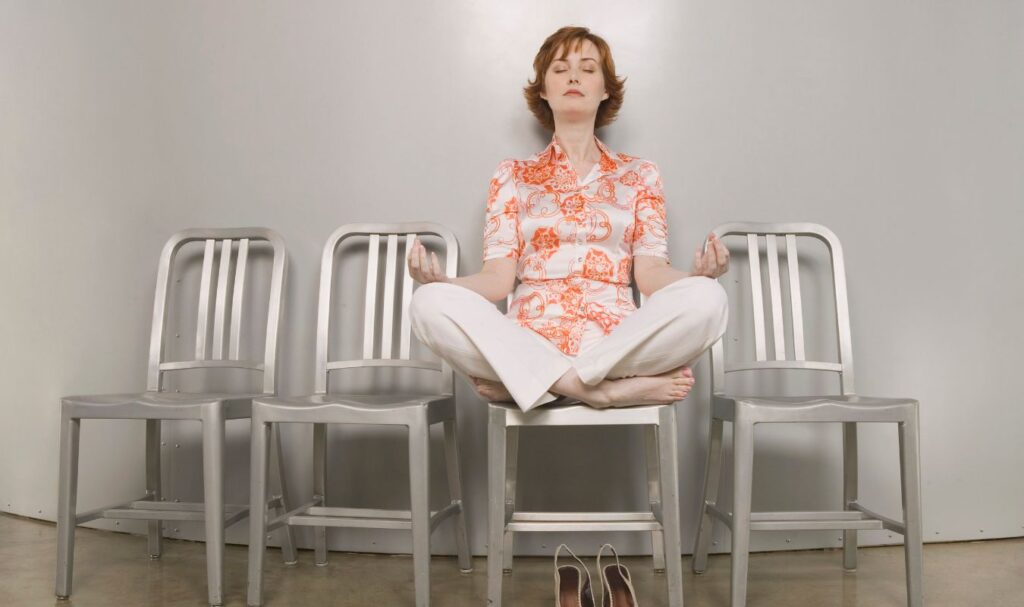
Chair sitting is treated as a fallback option by many beginners, as if it’s what you do when you’re not flexible enough for the real thing. This framing is wrong. A correctly positioned chair sit is as effective as any floor posture, and for many people — especially those with back pain, knee issues, or limited hip mobility — it’s the most sustainable long-term option.
The key is not to lean against the back of the chair. Sitting toward the front edge of the seat and holding the spine upright under its own support gives you the same spinal alignment as any floor position. Harvard Health’s guidance on posture and back health is clear: maintaining proper spinal alignment reduces strain on muscles and joints — which is exactly what sustained meditation practice requires.
How to sit in a chair for meditation
- Sit toward the front third of the seat, feet flat on the floor, hip-width apart
- Spine upright, not leaning against the back of the chair
- Hips slightly higher than knees — if the chair is too low, place a folded blanket under your sit bones
- Hands resting on the thighs, palms down or palms up
- Shoulders dropped and relaxed, not held or raised
- Imagine a thread from the crown of the head gently pulling upward — lengthening, not stiffening
If you need back support for medical reasons, use it. Place a rolled towel at the lumbar curve rather than resting the whole back against the chair, which tends to encourage slouching. The goal is a spine that’s long and naturally curved, not pressed flat against a surface.
Other Meditation Positions
Kneeling (Seiza)
Kneel with the knees hip-width apart and sit back between or on top of the heels. A meditation bench (seiza bench) or thick cushion between the sit bones and the heels makes this significantly more comfortable and is strongly recommended for anyone trying this position beyond five minutes. Seiza naturally encourages an upright spine and is often described as producing a particular quality of alertness.
Best for: people who find cross-legged positions uncomfortable but want a floor-based practice. Not suitable for those with knee pain. Short to medium sessions until ankle and shin tolerance builds.
Lying Down (Supine)
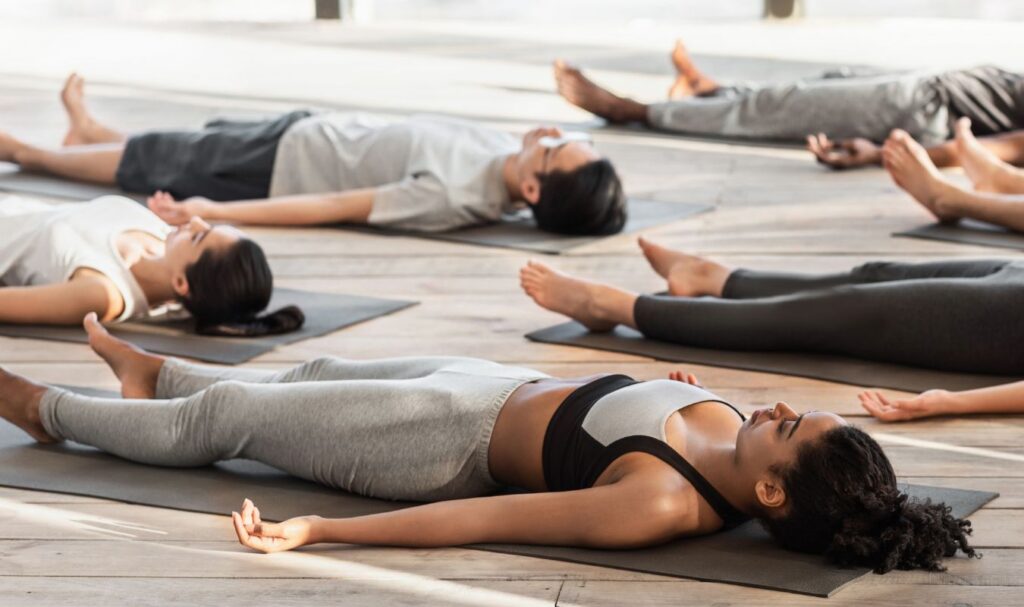
Flat on the back, legs slightly apart, arms resting at the sides with palms facing up. This is the standard position for body scan meditation and progressive relaxation practices, where the intention is physical release rather than sustained focus.
The significant risk with lying down for any other type of meditation is sleep. A 2010 study on meditation and psychomotor vigilance used upright sitting as the standard practice position specifically to maintain the alertness that distinguishes meditation from rest. Lying down removes that postural support for wakefulness.
Use lying down intentionally for practices that suit it — body scan, yoga nidra, sleep-focused mindfulness techniques — rather than as a default when sitting feels uncomfortable. If you fall asleep during lying meditation more than occasionally, that’s a signal to return to a seated position.
Standing
Less common in Western practice but valid and well-supported in several traditions. Stand with feet hip-width apart, knees soft (not locked), weight evenly distributed. Arms relaxed at the sides. Standing meditation is useful when seated practice consistently produces drowsiness, and it’s also a natural gateway into walking meditation, which begins and ends in stillness.
What to Do About Physical Discomfort
Some discomfort in meditation posture is normal, particularly in the early weeks when the body is adapting to positions it doesn’t use regularly. The question is what kind of discomfort, and what it means.
| Type of sensation | What to do |
|---|---|
| Dull ache in hips or thighs | Work with it if it’s tolerable. This usually resolves as flexibility builds. Elevate sit bones if on the floor |
| Pressure or tingling in the feet | Normal with floor positions. Shift slightly, or uncross and recross with the other leg on top |
| Lower back ache | Usually means the pelvis is tilting back. Add elevation under sit bones, or switch to a chair |
| Sharp or shooting pain anywhere | Adjust immediately. This is not discomfort to sit with — it’s a signal that something is wrong |
| Knee pain in lotus or half-lotus | Come out of the position. Never force rotation into the knee joint |
| General restlessness | This is mental, not physical. It’s a common meditation challenge — note it and return to the object of attention |
Props are not a compromise — they’re tools. A zafu (round meditation cushion), a folded blanket, a yoga block, or a rolled towel under the lumbar curve all serve the same purpose: creating the physical conditions for an upright, relaxed spine. Use whatever makes that possible.
If sitting causes persistent pain that doesn’t resolve with position changes or props, that’s worth addressing with a physical therapist before continuing. Starting with a short session and building gradually gives the body time to adapt without injury.
Which Position Suits Which Practice
Not all meditation practices have the same postural requirements. Here’s a quick guide:
| Practice | Best position(s) |
|---|---|
| Breath meditation | Any upright seated position — floor or chair. Upright spine allows full diaphragmatic breathing |
| Body scan | Lying down (supine) or reclined in a chair. Physical release is the intention |
| Loving kindness | Any comfortable seated position. Emotional openness benefits from a relaxed, non-rigid posture |
| Meditation for anxiety | Chair or Burmese. Both offer stability without physical strain, which helps an already-activated nervous system |
| Walking meditation | Standing and moving. Begins and ends in stillness — brief standing meditation before and after |
| Visualisation / manifestation work | Reclined chair or lying down with a slight incline. Enough relaxation for imagery without losing awareness |
Frequently Asked Questions
Does it matter which way I face when I meditate?
Not for most practices. Some traditions assign significance to facing east or toward a specific object, but there’s no evidence this affects the quality of attention. Face whatever direction helps you feel settled. If you meditate by a window, facing away from direct light often reduces distraction.
What should I do with my hands?
Rest them somewhere that requires no muscular effort to maintain. Common options: palms down on the thighs, palms up on the thighs, or one hand resting in the other in the lap (the traditional “cosmic mudra” in Zen). The hands should feel deliberately placed rather than forgotten. Beyond that, any position that doesn’t create tension in the shoulders or arms works.
Should my eyes be open or closed?
Both are valid and serve different purposes. Eyes closed reduces visual distraction and suits most beginners. Eyes half-open and cast downward at a 45-degree angle is the traditional Zen approach and can help prevent drowsiness. Eyes fully open is used in some Tibetan practices. Start with eyes closed and experiment from there once you have a baseline practice.
How long should I hold a position before I can move?
There’s no rule. For dull discomfort that’s workable, the practice is to stay with it and observe — this builds both physical and attentional tolerance. For sharp pain, move immediately. For a general urge to shift that feels more mental than physical, try staying for another 60 seconds and see if it passes. How long to meditate is a separate question from posture — but building session length gradually gives the body time to adapt to holding any position.
Can I meditate lying down every session?
You can, but you’ll likely spend a significant portion of those sessions asleep rather than meditating — particularly in the early stages of practice. Lying down works well for body scan and sleep-adjacent practices. For attention training, an upright position is more reliable. If you genuinely cannot sit upright for medical reasons, lying down with the knees bent and feet flat on the floor (constructive rest position) keeps the body slightly more alert than full supine.
I’ve been meditating for a while but my posture still hurts. What now?
Persistent pain that doesn’t respond to cushions, elevation, or position changes is worth investigating. Common culprits are tight hip flexors from prolonged daily sitting, weak core muscles that can’t support an upright spine without fatigue, and chairs or cushions that are the wrong height. A daily meditation routine that incorporates 5–10 minutes of hip-opening movement before sitting often resolves chronic postural discomfort entirely. If it doesn’t, a physiotherapist assessment is the right next step.
The Position Is Not the Practice
Posture is infrastructure. It creates the physical conditions for attention to settle — but it’s not where the practice happens. The practice happens in the quality of attention you bring, whatever shape your body is in when you bring it.
If you’ve been avoiding meditation because sitting on the floor is uncomfortable, sit in a chair. If the chair feels too casual, add the postural details above until it doesn’t. If lying down is what makes practice possible right now, use it for the practices it suits.
The only wrong position is the one that’s stopping you from practising at all.


