
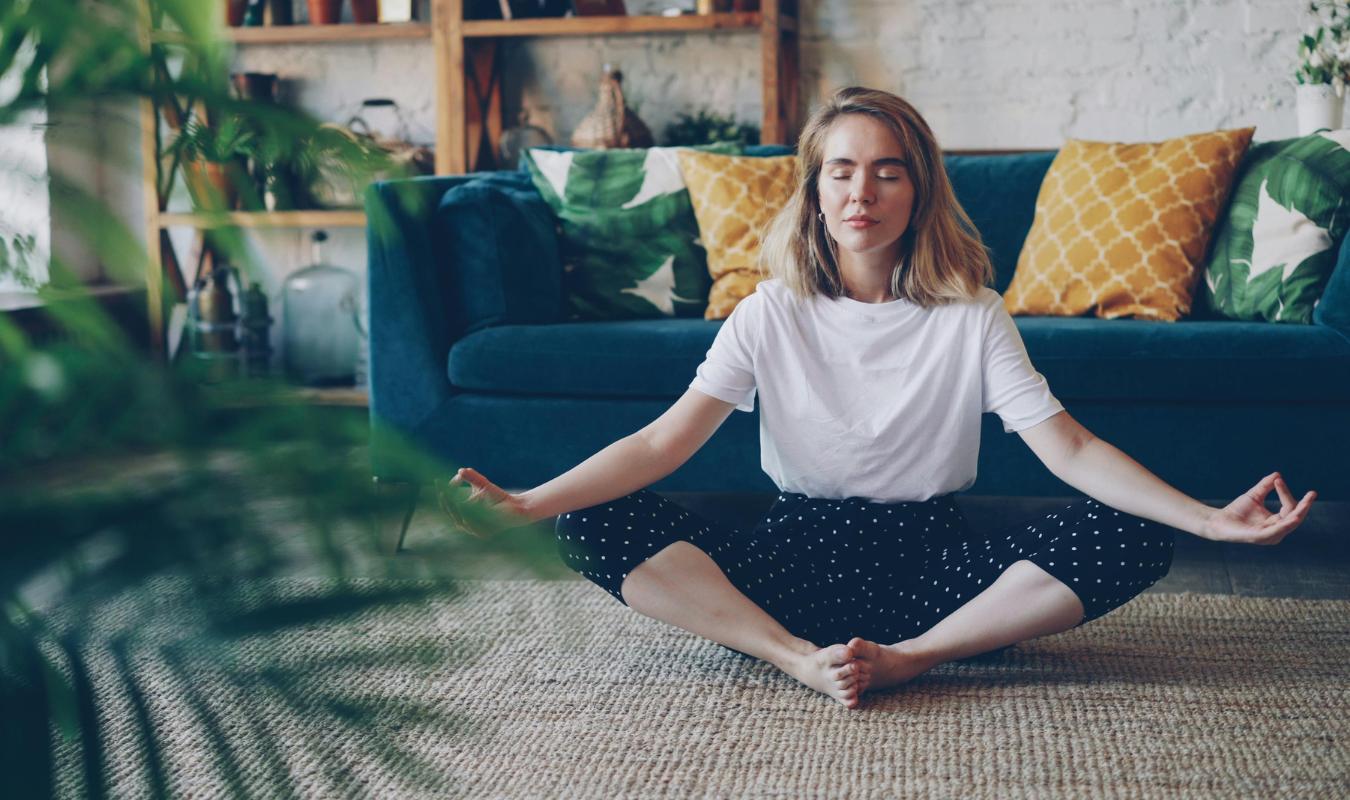
If you’ve ever tried to meditate while anxious and felt it made things worse, you’re not doing it wrong.
The racing thoughts, the physical restlessness, the creeping sense that sitting still with your own mind is the last thing you should be doing right now — these are not signs of failure. They are signs of anxiety doing exactly what anxiety does: generating a powerful urge to escape whatever is making you uncomfortable.
And what anxiety finds most uncomfortable is stillness.
Understanding why that happens — and why the discomfort is not an obstacle but the actual mechanism through which meditation helps — changes everything about how you approach the practice. This is not ‘just breathe’ advice. This is a grounded, honest look at what meditation does for anxiety, what the research shows, and what actually works for anxious minds.
| Does meditation help anxiety? Yes — with an important caveat about how. Meditation does not eliminate anxious thoughts or prevent anxiety from arising. What it does, with consistent practice, is change your relationship to those thoughts: reducing their intensity, shortening the time you spend fused with them, and widening the gap between an anxious thought and an anxious reaction. A 2014 meta-analysis of 47 randomised trials published in JAMA Internal Medicine found moderate evidence that mindfulness meditation produces meaningful reductions in anxiety symptoms — effects that were maintained at three to six month follow-up. |
| KEY TAKEAWAYS | |
|---|---|
| Anxiety makes meditation feel impossible — that’s not a reason to avoid it | The discomfort of sitting with an anxious mind is not a sign the practice isn’t working. It is the practice. The obstacle is the work. |
| Meditation doesn’t suppress anxiety — it changes your relationship with it | The goal is not to stop anxious thoughts. It’s to stop being hijacked by them. That distinction changes everything about how you approach the practice. |
| The body must come first | Trying to calm an anxious mind through thinking alone doesn’t work. Settling the nervous system physically — through grounding and breath — creates the conditions where the mind can follow. |
| The science is substantial and specific | A 2014 meta-analysis of 47 trials found moderate evidence that mindfulness meditation reduces anxiety symptoms. This is not soft self-help — it’s measurable, replicated research. |
| Four distinct practices work for anxiety | Box breathing, body scan, open awareness, and loving-kindness each address anxiety through different mechanisms. One will fit your particular pattern better than the others. |
| Meditating only during crisis is one of the biggest mistakes | Anxiety spikes are the hardest time to start a new practice. A small consistent daily practice, maintained between episodes, is what builds the actual skill. |
| You cannot fail at meditation | A mind full of anxious thoughts during meditation is not a failed meditation. Every moment of noticing — every return to the anchor — is a successful repetition of the skill. |
Why Anxiety Makes Meditation Feel Impossible
Anxiety is, at its core, a threat-detection system that has become oversensitive. The amygdala — the brain’s alarm centre — fires in response to perceived danger, flooding the body with cortisol and adrenaline, narrowing attention onto the threat, and generating a powerful drive to act. Run, fight, fix, escape.
Meditation asks you to do the opposite: sit still, reduce external input, and turn attention inward. For an anxious nervous system, this instruction is almost paradoxical. The system that’s trying to protect you by scanning for threats is now being asked to stop scanning — and the attempt to stop scanning becomes its own source of threat.
The suppression paradox
Most people approach meditation for anxiety by trying to suppress the anxious thoughts. Push them away. Don’t go there. Clear your mind.
This strategy backfires reliably. Attempting to suppress a thought requires the mind to actively monitor for it — which keeps the thought active. The harder you try to not think about something, the more reliably it surfaces. This is Daniel Wegner’s ironic process theory, and it operates with particular force in anxious minds because the monitoring process itself feels urgent.
The result is a self-reinforcing loop: the anxious thought arrives, you try to push it away, the effort of pushing amplifies it, the amplification feels like proof that something is wrong, which generates more anxiety. This is why ‘just clear your mind’ is genuinely the worst advice you can give an anxious meditator.
Why this matters for how you meditate
The solution is not to try harder to suppress. It’s to change the relationship to the thoughts entirely — from adversarial to observational. This is the core mechanism through which mindfulness works for anxiety: not eliminating the thoughts, but learning to watch them without being fused to them. A thought observed is a thought that has lost some of its command.
That shift sounds simple. For an anxious mind, it is genuinely difficult. And that difficulty is not a reason to stop. It is the practice.
What Meditation Actually Does for Anxiety: The Science
The research base on meditation and anxiety is now substantial enough to make confident claims about what changes and how quickly.
The meta-analytic evidence
The most comprehensive review to date — Goyal et al. 2014, published in JAMA Internal Medicine — analysed 47 randomised controlled trials and found moderate evidence that mindfulness meditation programmes produced meaningful reductions in anxiety symptoms, with effects maintained at three to six month follow-up. This was not a review of meditation enthusiasts. These were clinical populations, many with diagnosed anxiety disorders.
The effect sizes were modest but consistent and durable — comparable to what antidepressants achieve in mild to moderate anxiety, without the side effects.
What changes in the brain
At the neurological level, Hölzel and colleagues at Harvard and MGH found that eight weeks of MBSR produced measurable increases in grey matter density in the hippocampus and posterior cingulate cortex — regions involved in learning, emotional regulation, and self-referential processing. Critically, earlier work by the same team showed that perceived stress was correlated with structural changes in the amygdala: as stress reduced, the amygdala changed too.
The amygdala — the alarm system that drives anxiety responses — becomes less reactive with consistent meditation practice. Not suppressed, not disabled. Less reactive. The threshold for what triggers it rises.
For a broader overview of what this research means for mental health outcomes, the evidence on mindfulness and mental health goes deeper into the data.
The nervous system mechanism
Beneath the neuroscience is a more immediate physiological mechanism. Anxiety activates the sympathetic nervous system — the fight-or-flight branch. Meditation, particularly breath-focused meditation with extended exhales, directly activates the parasympathetic branch — rest and recovery. Polyvagal research by Stephen Porges shows that vagal tone — the measure of parasympathetic activity — is both a marker of anxiety vulnerability and something that can be deliberately trained through practices like slow breathing and body awareness.
In practical terms: you can shift your nervous system state relatively quickly through the right kind of practice. Not permanently, not through one session. But the mechanism is reliable, and it works faster than most people expect.
| Meditation doesn’t remove the anxiety. It changes what you do with it — and over time, how loudly it demands your attention. |
The Body-First Rule for Anxious Meditators
The single most important adjustment anxious meditators can make is this: settle the body before you attempt to settle the mind.
Anxiety lives in the body as much as the mind — the tight chest, the shallow breathing, the braced posture, the gut contraction. Attempting to meditate from inside that physical state by trying to watch thoughts is like trying to read in a room where someone is shouting. The signal-to-noise ratio is wrong.
Two minutes of physical grounding before any meditation practice changes the starting conditions. Press your feet into the floor. Feel the weight of your body in the chair. Notice three physical sensations — the temperature of the air, the texture of the fabric, the pressure beneath you. This is not a relaxation technique. It is a nervous system reset that uses the body’s own proprioceptive signals to communicate safety.
From that grounded state, the mind is more accessible. The thoughts are still there. The anxiety hasn’t disappeared. But the volume has dropped enough to work with.
This is also why overstimulation compounds anxiety so reliably: a system already running at high activation has a much lower threshold for being pushed into full anxiety by a triggering thought. Reducing the baseline activation — through grounding and breath — raises that threshold before the session even begins.
4 Meditation Practices That Actually Work for Anxiety

These four practices address anxiety through different mechanisms. Try each one for a few days. One will fit your particular pattern of anxiety better than the others. If you’re new to meditation entirely, start with Practice 1 — it’s the most accessible entry point.
Practice 1: Box Breathing
Best for: acute anxiety, panic, the moment before a stressful event
| 1. Sit upright with your feet flat on the floor. Take one long exhale to begin — empty the lungs completely. |
| 2. Inhale slowly through your nose for a count of four. |
| 3. Hold the breath gently for a count of four. |
| 4. Exhale slowly through your mouth for a count of four. |
| 5. Hold the empty lungs for a count of four. Repeat for five to eight cycles. |
| 6. This practice directly regulates the autonomic nervous system through breath-heart rate coupling. The equal-ratio pattern is particularly effective at reducing the physical symptoms of anxiety — racing heart, shallow breathing, chest tightness — within minutes. |
Practice 2: Body Scan
Best for: anxiety held physically; tension, restlessness, chronic body bracing
| 1. Lie flat or sit with full back support. Close your eyes and take two slow exhales. |
| 2. Begin at the top of your head and move attention slowly downward — forehead, jaw, neck, shoulders, chest, arms, hands, stomach, lower back, hips, legs, feet. |
| 3. At each area, simply notice what’s present. Tension, warmth, numbness, ease. Do not try to change anything. Just observe. |
| 4. If you find a place of significant tension, pause and breathe into it — let the exhale carry some of the bracing with it. |
| 5. Continue for ten to fifteen minutes. The body scan works by shifting attention from the content of anxious thoughts to the physical state that sustains them — and physical states respond to awareness in ways that thoughts alone don’t. |
Practice 3: Open Awareness
Best for: ruminative anxiety; thought loops; the mind that won’t stop reviewing
| 1. Sit comfortably, close your eyes, and take a few slow breaths to settle. |
| 2. Instead of focusing on a single anchor, open your attention to whatever arises — sounds, sensations, thoughts — without latching onto any of it. |
| 3. Imagine you are sitting at the edge of a stream, watching leaves float past. Each thought, each sound, each sensation is a leaf. You notice it, watch it move, let it go. |
| 4. When you find yourself following a thought downstream — which you will — simply return to the bank. No judgment. Just a return. |
| 5. This practice builds what researchers call ‘decentering’: the ability to observe thoughts as mental events rather than facts. For ruminative anxiety, it is particularly powerful because it loosens the mind’s grip on the thought loop without trying to suppress it. |
Practice 4: Loving-Kindness (Metta)
Best for: anxiety rooted in self-criticism, shame, or fear of others’ judgment
| 1. Sit comfortably and take two slow breaths. Bring to mind a version of yourself that is struggling right now — not your best self, but the one carrying the anxiety. |
| 2. Offer silently: ‘May I be safe. May I be at ease. May I be free from suffering.’ Let each phrase settle before moving to the next. |
| 3. Extend outward: first to someone you love, then to a neutral person, then broadly to everyone. |
| 4. If warmth feels unavailable at first, don’t force it. Hold the intention. The practice builds over sessions, not within a single one. |
| 5. Loving-kindness directly counters the self-directed threat that underlies much anxiety — the sense that you are in danger of being judged, rejected, or found inadequate. It trains the brain to generate safety signals from the inside. |
Common Mistakes Anxious Meditators Make
Meditating only during a crisis
This is the most common mistake and the most understandable one. Anxiety spikes, so you try meditation. But a spike is the hardest possible moment to build a new skill. The nervous system is already at maximum activation. The practice feels impossible. You conclude it doesn’t work.
Meditation works the same way physical training does: you build the capacity between the hard moments so it’s available during them. A five-minute daily practice on calm days — before you need it — is what creates the skill you’ll be able to access when the night gets loud or the anxiety spikes unexpectedly.
Treating discomfort as failure
Discomfort during meditation is not a sign you’re doing it wrong. For anxious meditators especially, the first few minutes of sitting still are often the most uncomfortable. The body hasn’t settled, the mind is still scanning, and the gap between where you are and where you think you’re supposed to be feels enormous.
This is the threshold. Most people stop here. Staying for two more minutes — even in discomfort — is where the practice actually happens.
Skipping the body entirely
Jumping straight to breath observation or thought watching without first grounding the body is like trying to have a difficult conversation in a noisy room. The signal is there but the conditions aren’t right. Two minutes of grounding before the formal practice dramatically improves what’s accessible. The mindfulness for stress guide covers this transition from reactive to regulated in more detail.
Trying too hard to relax
Relaxation is not the goal of meditation. It is sometimes a byproduct, but when you make it the goal — especially with an anxious mind — the effort of trying to relax becomes its own source of tension. The goal is attention: noticing where the mind goes, and returning. Relaxation, when it comes, comes as a consequence of that.
How to Build a Meditation Practice When Anxiety Makes Consistency Hard
Anxiety creates a specific problem for habit formation: it makes the future feel uncertain and the present feel unsafe, which makes planning and follow-through harder than average. This is not a character flaw. It is the nature of the condition.
The solution is to make the practice as small and frictionless as possible.
Start with two minutes
Not five. Not ten. Two minutes, done daily, is the entire goal for the first two weeks. Two minutes is so small it feels embarrassing, which means there is almost no resistance to doing it. And two minutes done daily for fourteen days builds something five minutes done sporadically never will: the identity of someone who meditates.
Remove every decision
Decide in advance: which practice, what time, what trigger. Attach it to something that already happens — morning coffee, getting into bed, sitting at your desk. The habit stacking approach described in the morning meditation guide applies equally here. Anxiety depletes decision-making resources; removing decisions from the equation protects the practice from being eroded by the condition it’s designed to treat.
What to do when the anxiety is too loud to sit with
On days when sitting still genuinely feels impossible — the anxiety is at a spike and stillness is not accessible — don’t try to force it. Move instead. A slow five-minute walk, taken with deliberate attention to physical sensation (the ground underfoot, the air, the movement of your arms), is a valid form of mindfulness practice. It uses the body’s movement to discharge activation, which can make stillness accessible afterward.
If meditation has felt consistently inaccessible, the gentle three-step approach for when meditation feels hard removes the expectation of stillness entirely and rebuilds from a more accessible starting point.
And if anxiety and overthinking run together for you — the looping thoughts, the inability to switch off — the guide to mindfulness for overthinkers addresses that specific overlap with an approach tailored to how that kind of mind actually works.
| You’re not trying to meditate your way to a life without anxiety. You’re building a slightly wider space between the feeling and what you do with it. |
Frequently Asked Questions
Can meditation make anxiety worse?
For some people, and in some circumstances, yes. Sitting quietly and turning attention inward can initially amplify anxious thoughts rather than reduce them — particularly for people with trauma histories, where stillness has historically felt unsafe. If meditation consistently increases distress rather than eventually reducing it, a body-movement-based practice (walking, yoga, gentle stretching with breath attention) is a better entry point. Working with a therapist alongside a meditation practice is also valuable for anxiety with a trauma component.
How long does it take for meditation to help with anxiety?
Most people notice a shift in acute anxiety symptoms — slightly reduced reactivity, better recovery after a spike — within two to four weeks of daily practice. The more significant changes in baseline anxiety, amygdala reactivity, and stress response patterns tend to consolidate at eight weeks, which is the length of the standard MBSR programme studied in most of the clinical research. Consistency matters far more than session length.
Is it normal to feel more anxious when I first start meditating?
Yes, and it is very common. When you sit still and reduce external input, the thoughts and physical sensations that were running in the background become more noticeable — not because they’ve increased, but because there’s less competing for attention. Many people interpret this as the meditation making things worse. It is usually the opposite: you are becoming more aware of what was already there. This phase typically passes within one to two weeks of consistent practice.
Should I meditate when I’m having a panic attack?
During a full panic attack, the nervous system is at maximum activation and formal meditation is rarely accessible. What helps more is the physiological first aid: box breathing (even just a long slow exhale), grounding through physical contact with a surface, and reducing sensory input. These are the immediate regulation tools. Formal meditation practice is what you build between panic episodes so the nervous system has more resources available when one arrives.
Does guided meditation work better for anxiety than silent meditation?
For beginners with anxiety, guided meditation is generally more effective because it provides an external anchor that competes with anxious thought loops. The voice gives the mind somewhere to go other than into the loop. As the practice develops, silent meditation builds more transferable skill. Many people with anxiety find a hybrid approach works well: guided practice during high-anxiety periods, silent practice as the baseline.
Can I combine meditation with therapy or medication for anxiety?
Yes, and research suggests the combination is more effective than either alone for many people. Meditation is not a replacement for professional treatment of clinical anxiety — it is a complementary practice that supports what therapy and medication do. It works particularly well alongside cognitive-behavioural therapy because both approaches target the relationship between thoughts and reactions, just through different mechanisms.
A Skill, Not a Cure — And Skills Compound
Meditation will not make your anxiety disappear. It is not that kind of intervention. What it does — with patience and consistency — is change the terrain that anxiety operates on.
The alarm system becomes less sensitive. The gap between the anxious thought and the anxious reaction gets marginally wider. The physical state that sustains anxiety becomes easier to shift. The loops lose a little of their authority.
None of this is dramatic. It accumulates quietly, over weeks. And then one day you notice that something that would have derailed your afternoon didn’t quite derail it. That you came back from the spiral a little faster than before. That the space — the one you’ve been building — is actually there.
That’s the practice working. Not perfectly. Not permanently. But working.
If you want to extend this into a broader daily practice, the morning meditation guide covers how to build consistency in a way that makes anxiety’s resistance to routine easier to work around. And if journaling speaks to you as a complementary tool, journaling for anxiety addresses the specific ways writing quiets the worry loop — on its own terms.


