
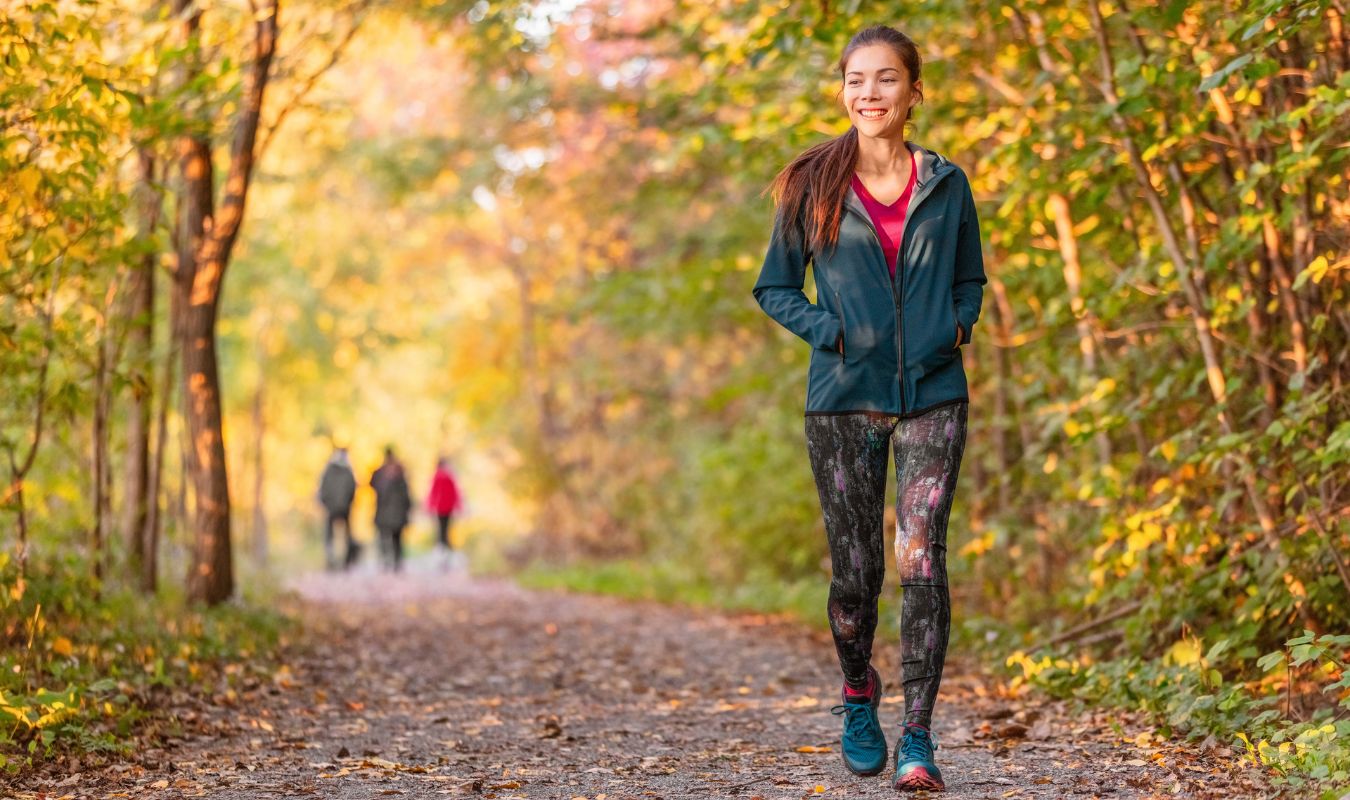
| Walking meditation is a mindfulness practice that uses the physical sensation of movement — your steps, breath, and body — as the anchor for your attention. Unlike seated meditation, it gives restless or anxious minds something tangible to focus on, making it one of the most accessible entry points into a consistent mindfulness practice. |
KEY TAKEAWAYS
| What it is | A mindfulness practice that uses the rhythm of walking — steps, breath, body sensation — as a focus anchor |
| Who it’s for | Anyone who struggles to sit still, gets restless during seated meditation, or wants a practice that fits daily life |
| How long | Even 5–10 minutes counts; most people start with a single block or lap and build from there |
| Where | Anywhere — a quiet street, a park, your living room, a hallway at work |
| Key difference | Movement isn’t a distraction — it’s the practice. The goal is sustained attention, not stillness |
| Best for | Anxiety, overthinking, restlessness, or anyone who has tried seated meditation and quit |
If you’ve ever sat down to meditate and spent the whole time fighting your own body, you’re not doing it wrong. For a lot of people — especially overthinkers and those carrying anxiety — stillness doesn’t quiet the mind. It amplifies it.
Walking meditation is a different entry point. Instead of trying to hold attention while the body stays frozen, you give both the mind and body something to work with together. The rhythm of your steps becomes the thing you return to. Movement becomes the anchor.
This isn’t a lesser version of ‘real’ meditation. Research on mindful movement shows it activates the same attentional networks as seated practice — and for some people, it works considerably better. Here’s everything you need to start.
What Walking Meditation Actually Is (And What It Isn’t)
Walking meditation is not a mindful stroll. It’s not power-walking while you occasionally notice the trees. The distinction is intentional attention: you are using the physical act of walking as the object of your focus, the same way a seated meditator uses the breath.
It also isn’t exercise with a spiritual label. The pace is usually slower than your natural walking speed because the goal is awareness, not output. That said, you can bring this quality of attention to any pace — including your regular commute — once you understand the core technique.
The simplest definition: walking meditation is deliberate, sustained attention to the physical experience of walking, returned gently each time the mind wanders.
How it differs from mindful walking
Mindful walking is a loose term for bringing more presence to any walk. Walking meditation is more structured — it has a defined technique, a clear object of attention, and a beginning and end. Think of mindful walking as the casual version; walking meditation as the formal practice.
Both are valuable. But if you want to build real attentional training — the kind that transfers into managing overthinking and stress — the structured form is where the actual work happens.
Why Walking Meditation Works (Especially If You Can’t Sit Still)
The restless mind resists stillness because it interprets inactivity as a threat. When you sit down to meditate, the brain’s default mode network — the circuit responsible for rumination, worry, and self-referential thinking — often kicks up. For overthinkers, this is particularly pronounced.
Movement disrupts this pattern in two important ways. First, rhythmic sensory input occupies the attentional system, giving the ruminating mind less bandwidth to spiral. Second, the bilateral nature of walking — left, right, left, right — has a natural regulating effect on the nervous system, similar to the mechanism researchers believe underlies EMDR therapy.
For people whose anxiety is wired into the body — tight chest, shallow breathing, restless legs — a moving anchor is simply easier to hold than a stationary one. The body gives the mind something real and immediate to return to, rather than asking it to find calm in stillness it can’t access yet.
| Movement isn’t the obstacle to meditation. For some minds, it’s the door. |
There’s also a practical dimension. One of the most common reasons people abandon meditation is that it requires a dedicated window of stillness they can’t carve out consistently. Walking meditation dissolves that barrier — if you already walk anywhere, you already have the time. And the benefits are well-supported: research published in Current Psychology found that core mindfulness facets — including non-reactivity and acting with awareness — significantly reduced anxiety and stress while improving psychological wellbeing. Walking meditation trains exactly these faculties, just with movement as the anchor instead of stillness.
How to Do Walking Meditation: The Basic Practice
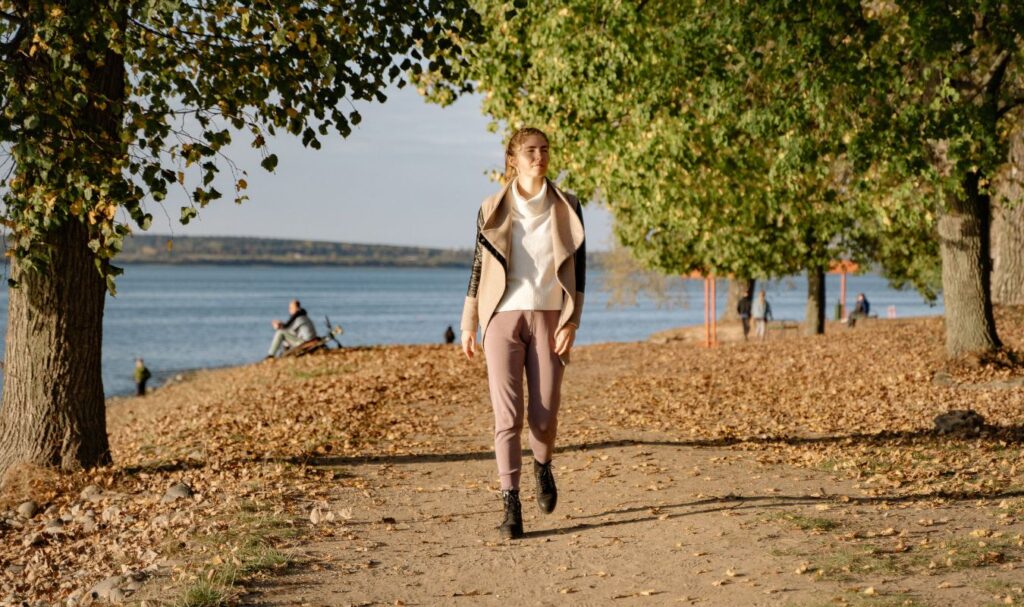
You don’t need a special location, equipment, or any prior experience. A quiet stretch of pavement, a garden path, or even a hallway works. Start with 10 minutes.
Step-by-Step: Basic Walking Meditation
- Find a path where you can walk back and forth without obstacles — 10 to 20 paces is enough. You don’t need distance.
- Stand still for a moment. Take two or three slow breaths. Feel your feet on the ground.
- Begin walking at a pace slightly slower than normal. There’s no destination — you’re walking to notice, not to arrive.
- Place your attention on the physical sensations of each step: the lift of the foot, the movement through the air, the contact with the ground. Feel the shift of weight.
- When your mind wanders — and it will — gently return attention to the sensation of the next step. No frustration needed. The return is the practice.
- At the end of your path, pause. Turn slowly. Begin again.
- After 10 minutes, stop. Stand still. Notice how you feel.
The most important thing to understand: you are not trying to clear your mind. You are training your attention. Every time you notice the mind has wandered and bring it back, that moment of noticing is the practice working. If seated practice has always felt impossible, how to meditate properly covers the same core principle in depth.
Indoors vs outdoors
Both work. Outdoors offers natural sensory richness — sounds, air, uneven surfaces — which can deepen the practice. Indoors gives you control, which is useful when you’re starting out or the weather makes outside impractical. A hallway or a room you can pace across is enough.
How slow should you walk?
Slow enough to pay attention, fast enough that it doesn’t feel performative. For most people that’s 50–70% of their normal walking speed. As you get more practiced, you can apply the same quality of attention at a completely normal pace — which is when the practice starts transferring into everyday life.
5 Walking Meditation Variations to Try
Once you have the basic practice, these variations let you deepen or adapt it to different moods and needs.
1. Counting Steps
Count each step silently from 1 to 10, then start again. Simple and powerful for very busy minds. The counting gives the analytical brain a job, which quiets the commentary. It’s structurally identical to breath counting meditation — just applied to movement instead of breath.
2. Breath-Synced Walking
Coordinate your steps with your breath. Inhale for three steps, exhale for four. Adjust the ratio to whatever feels natural. This creates a double anchor — body and breath together — which makes distraction harder and calm easier to find.
3. Sensory Awareness Walk
Expand attention beyond the feet. Notice five things you can feel (wind, fabric, warmth), four things you can hear, three things you can see clearly. This is essentially a body scan in motion — useful when anxiety is physically held and you need to discharge it through the senses.
4. The Labelling Walk
Silently name each sensation as it arises: ‘lifting’, ‘moving’, ‘placing’. Or broader: ‘warmth’, ‘sound’, ‘thinking’. Labelling creates gentle distance between you and the experience — the same mechanism that makes meditation for anxiety effective. You notice the thought or sensation without being absorbed by it.
5. Nature Attention Walk
Take the practice outside and anchor attention to the natural environment rather than the body. The sound of leaves, the texture of bark, the movement of light. Nature-based attention has its own body of research — particularly for stress and cortisol regulation — and pairs naturally with any outdoor walking habit.
Common Walking Meditation Mistakes (And How to Fix Them)
Trying to clear your mind
This is the most common misconception across all meditation practice. The goal is not an empty mind — it’s a trained one. If you find yourself trying to force mental clarity and frustrated when it doesn’t arrive, you’re chasing the wrong target. Noticing distraction and returning attention is the exercise. A wandering mind that keeps coming back is a mind that’s making progress.
Walking too fast
Speed and awareness trade off. If you’re moving at your normal pace, your mind is likely on autopilot — which defeats the purpose. Slow down enough that you actually have to pay attention to what your feet are doing. You can always speed up once attention is trained.
Checking the phone
Even a glance resets your attentional momentum. Leave it in your pocket or leave it behind entirely. The practice requires uninterrupted attention, and a screen is specifically designed to disrupt that. Ten minutes without it is achievable by anyone.
Giving up after one distracted session
Every beginner session feels scattered. That’s not failure — it’s what an untrained mind looks like when you first ask it to focus. The most common meditation challenges all share this pattern: the difficulty you feel early on is evidence that the training is needed, not that it isn’t working.
Making Walking Meditation a Habit
The most effective approach is habit stacking — attaching the practice to something you already do rather than trying to create a new standalone routine from scratch.
Habit stacking ideas
- Morning: replace your first walk of the day with a structured 10-minute practice before the day takes over. This pairs naturally with a morning meditation routine if you already have one.
- Commute: if you walk any part of your journey, designate the first 10 minutes as practice time. Headphones off, attention on feet.
- Lunch break: a 10-minute walk before or after eating. Easier to sustain than a pre-work practice for people with unpredictable mornings.
- Post-work reset: use walking meditation to draw a deliberate line between work and home. It serves the same nervous system function as a mindfulness-based stress reset.
Even 5–10 minutes of focused practice builds real attentional strength over time. Consistency matters more than duration. Three 10-minute sessions a week will outperform one 45-minute session you dread and skip.
For those with ADHD or significant restlessness, walking meditation is often recommended before attempting seated practice at all. The movement reduces the friction enough to make attention training possible — and once that foundation is there, seated practice becomes far more accessible.
Frequently Asked Questions
Is walking meditation as effective as sitting meditation?
For many people, yes — and for some, more so. Research shows comparable benefits in attention, anxiety reduction, and wellbeing. The practice you’ll actually do consistently is more effective than the one that feels inaccessible. If seated practice has repeatedly failed you, walking is a legitimate and well-supported alternative, not a consolation prize.
How long should a walking meditation session be?
Start with 10 minutes. That’s long enough to settle in and short enough to fit almost anywhere. As the practice becomes familiar, 15–20 minutes will feel natural. There’s no upper limit — some traditions involve hours of slow walking — but for building a sustainable habit, shorter and consistent beats longer and sporadic.
Do I need to walk slowly?
Slow is easier to start with because it gives you more time to notice each sensation before the next one arrives. But the practice can be done at any speed once attention is trained. Plenty of experienced practitioners apply it at a completely normal walking pace. Start slow, then experiment.
Can I listen to music or a podcast while doing walking meditation?
Not during formal practice. The point is to anchor attention to physical sensation — adding audio gives the mind somewhere else to go, which defeats the purpose. If you find silence uncomfortable, that discomfort is worth sitting with. It usually passes within a few sessions.
What if I live somewhere too busy or noisy to walk mindfully?
Noise and busyness are part of the environment, not obstacles to it. You can include sounds as objects of attention alongside physical sensation. Indoor practice works just as well — a hallway, a room, or even walking on the spot counts. The location matters less than the quality of attention you bring.
How does walking meditation compare to other alternatives?
Walking is one of several effective alternatives to seated meditation that work well for people who struggle with stillness. Others include breathwork, body scan, and movement-based practices like yoga or tai chi. Walking has the practical advantage of requiring no equipment, no dedicated space, and no learning curve beyond the basic technique.
Start Where You Are
You don’t need a perfect route, a quiet park, or any prior meditation experience. You need ten minutes and a stretch of ground long enough to take a few steps.
Walking meditation works because it meets the restless mind where it is — in motion, in the body, in the present moment. You’re not fighting your nature by asking it to be still. You’re working with it.
The practice is simple: walk slowly, notice what you feel, return when you wander. That’s it. The consistency is what builds the skill — and the skill, over time, is what changes how the mind works even when you’re not meditating at all.
Start today. One lap. Ten minutes. That’s enough.


