
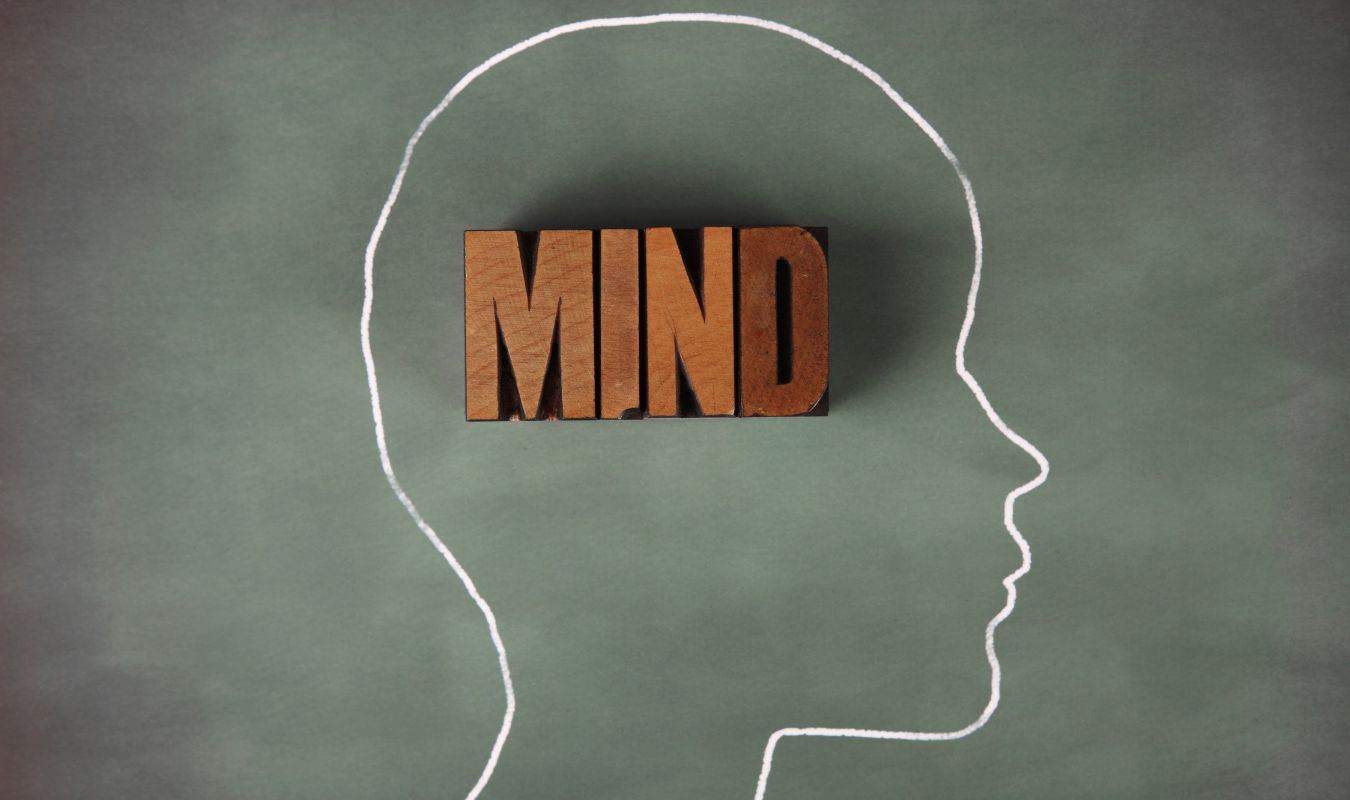
| The subconscious mind is the part of the mind that processes information, stores patterns, and drives behaviour outside of conscious awareness. It operates continuously in the background — governing automatic responses, habitual actions, emotional reactions, and deeply held beliefs — without requiring deliberate thought. Neuroscience refers to this as implicit or non-declarative processing, and research suggests it accounts for the vast majority of human mental activity. |
| KEY TAKEAWAYS | |
|---|---|
| What it is | The part of the mind that processes, stores, and drives behaviour outside conscious awareness — also called implicit processing |
| What it controls | Automatic behaviours, emotional reactions, habitual patterns, physical regulation, and deeply held beliefs |
| How it forms | Through repetition, emotional imprinting, and early conditioning — patterns become automatic when repeated consistently |
| Why it matters | Most of your daily behaviour is subconsciously driven. Understanding it explains patterns that conscious effort alone can’t change |
| How to work with it | Mindfulness, journaling, body awareness, and conscious repetition are the main access points |
| What it isn’t | Not a separate entity, not fixed, not all-knowing. It’s a functional description of how the brain processes experience automatically |
Think about the last time you drove somewhere familiar and arrived without remembering most of the journey. Or the way a particular tone of voice immediately triggers a familiar feeling before you’ve consciously processed why. Or how you reach for the phone before you’ve decided to.
None of these were conscious choices. They were the subconscious mind doing what it’s designed to do: running established patterns automatically so the conscious mind doesn’t have to.
For overthinkers, understanding the subconscious isn’t abstract philosophy — it’s directly practical. The patterns you’re trying to change, the reactions you can’t seem to control, the beliefs that persist despite evidence against them: these are subconscious programmes running in the background. Here’s what’s actually happening, and what you can do about it.
What the Subconscious Mind Actually Is
The term ‘subconscious’ isn’t a formal neuroscience term — the field uses implicit or non-declarative processing instead. But the underlying concept is well-established: a significant portion of mental processing happens outside conscious awareness, operating on patterns laid down through experience.
Neuroscientist Peter Reber’s review of the neural basis of implicit learning and memory describes implicit memory as experience-dependent learning that is acquired and expressed automatically — supported by brain mechanisms distinct from those involved in conscious, declarative memory. You don’t need to recall learning something for it to influence your behaviour.
The most useful framing for everyday purposes is psychologist Daniel Kahneman’s distinction between two processing modes:
- System 1 (fast, automatic): operates without conscious effort, draws on patterns and associations, produces intuitions and emotional reactions. This is broadly what the subconscious does.
- System 2 (slow, deliberate): requires focused attention, handles complex reasoning and new decisions, tires with extended use. This is broadly what we call conscious thought.
The subconscious isn’t a place in the brain — it’s a description of how the brain handles familiar and emotionally encoded information: quickly, automatically, and outside the spotlight of conscious attention. This is what mindfulness practice works with when it asks you to observe your reactions before acting on them.
| You don’t think your way through most of your day. Your subconscious does it for you — whether you intended it to or not. |
How the Subconscious Mind Forms: Where Patterns Come From
Subconscious patterns aren’t innate. They’re built through experience — specifically through three mechanisms:
1. Repetition
Any behaviour repeated consistently in a stable context will eventually become automatic. A 2010 study by Lally and colleagues tracked 96 participants forming new habits and found that automaticity developed over a range of 18 to 254 days, with a median of 66 days. The critical finding was that behaviour becomes subconscious not through insight or decision but through consistent repetition — the brain gradually stops requiring conscious involvement for familiar actions.
2. Emotional Imprinting
Experiences with strong emotional charge — particularly fear, shame, or attachment — are encoded more deeply than neutral information. This is why early experiences shape adult patterns disproportionately: the emotional intensity of childhood experiences drives them into implicit memory, where they operate as templates for interpreting similar situations decades later.
This is directly relevant to anxiety and stress responses. When the nervous system encounters a situation that resembles an earlier threatening experience, it activates the same response pattern automatically — before the conscious mind has had a chance to assess whether the threat is real.
3. Early Conditioning
The brain is most plastic in early life, which means patterns formed in childhood — particularly around safety, belonging, and self-worth — become deeply embedded. These early templates often run as default assumptions well into adulthood, even when circumstances have changed entirely. The process of becoming aware of these patterns is what daily mindfulness practice gradually makes possible.
What the Subconscious Mind Controls

Social psychologists John Bargh and Tanya Chartrand documented in their foundational research on automaticity that much of everyday social and behavioural life is governed by processes that are not consciously intended and that operate outside awareness — automatically triggered by features of the environment.
In practical terms, subconscious processing governs:
| Domain | Examples |
|---|---|
| Habitual behaviour | Morning routines, driving familiar routes, reaching for the phone, posture, eating patterns |
| Emotional reactions | Sudden anxiety, irritability, warmth, defensiveness — felt before conscious interpretation |
| Beliefs about the self | “I’m not good enough”, “I’m a burden”, “I have to earn love” — often invisible because they feel like facts |
| Physical regulation | Breathing rate, posture, muscle tension, digestive responses to stress — all run automatically |
| Social responses | Tone mirroring, facial expressions, approach/avoidance — often before conscious decision |
| Pattern recognition | Gut feelings, intuitions, the sense that something ‘feels off’ before you can explain why |
The subconscious connection to physical regulation is particularly significant. Chronic stress patterns, tight shoulders, shallow breathing, digestive sensitivity — these often reflect subconscious nervous system activation rather than conscious tension. The body scan meditation is one of the most effective tools for surfacing this somatic layer of subconscious processing.
The same applies to the cortisol dysregulation that underlies chronic stress — the nervous system running a subconscious threat response long after the original threat has passed.
Signs Your Subconscious Is Running the Show
Most people only become aware of subconscious patterns when they keep producing outcomes they don’t consciously want. Common signs:
- Reacting before you’ve decided to — a sharp response, a defensive posture, an avoidance behaviour that happened before you thought about it
- Recurring relationship dynamics — the same argument across different relationships, the same role you keep finding yourself in
- Unexplained resistance to things you say you want — the goal keeps not happening despite genuine effort
- Self-sabotage at moments of progress — a subconscious pattern that equates success with threat or loss
- Chronic physical tension with no obvious cause — the body holding a subconscious emotional state
- Thoughts that feel like facts rather than interpretations — the mark of a belief running below the level of examination
Recognising these patterns is the first step. The cycle of overthinking is often a sign of the conscious mind repeatedly bumping up against a subconscious pattern it can’t resolve by thinking harder.
How to Access and Work With the Subconscious Mind
The subconscious doesn’t respond to direct commands. You can’t decide to change a subconscious pattern any more than you can decide to stop having an emotional reaction. What you can do is create the conditions for the pattern to surface, be observed, and gradually be updated through new experience.
Mindfulness: The Observation Layer
Mindfulness creates a gap between stimulus and response — the moment where a subconscious reaction would normally run automatically. By learning to notice the reaction before acting on it, you gradually bring it into conscious view. How to meditate properly is the starting point for building this capacity.
Journaling: Externalising the Internal
Writing brings implicit patterns into explicit language, which is one of the most reliable ways to surface subconscious beliefs. The question “why does this keep happening?” written in mindfulness journaling with genuine curiosity — rather than self-criticism — often surfaces answers that direct introspection doesn’t reach.
Body Awareness: Reading the Physical Layer
Because the subconscious is deeply connected to physical regulation, the body often reflects subconscious states before the mind catches up. Practices that build somatic awareness — breath work, body scan, mindful breathing — access the subconscious through sensation rather than thought.
Conscious Repetition: Updating the Pattern
New subconscious patterns form through the same mechanism as old ones: repetition in a stable context. This is the legitimate mechanism behind affirmations and visualisation — not magical thinking, but consistent practice that gradually makes a new response more automatic than the old one. The mindful version of this practice, covered in the guide to mindfulness for self-compassion, is more effective than rote repetition because it engages genuine attention alongside the words.
What the Subconscious Mind Is Not
Not a separate, hidden self
The subconscious isn’t a second personality lurking beneath the surface with its own agenda. It’s a functional description of how the brain handles familiar information — efficiently, automatically, and without requiring conscious processing. It’s a feature of how the brain works, not a separate entity.
Not fixed or unchangeable
Subconscious patterns are built through experience and can be updated through new experience. Neuroplasticity — the brain’s capacity to reorganise itself in response to repeated activation — is the mechanism. This is why self-compassion practices and consistent mindfulness training produce measurable changes in habitual patterns over time. Change is slow and requires repetition, but it’s real.
Not all-knowing or infallible
The subconscious runs on pattern-matching. It identifies the current situation as similar to a past one and applies the same response — which works well when the patterns are accurate and badly when they’re outdated. A subconscious fear response that made sense in childhood can misfire for decades in situations that only superficially resemble the original. This is why examining subconscious patterns — rather than simply trusting them — is so valuable.
Not the same as the unconscious (in Freudian terms)
The Freudian unconscious — a reservoir of repressed desires and traumatic material actively hidden from awareness — is a different concept from the neuroscientific model of implicit processing. Modern research doesn’t support the hydraulic model of repression, but it does fully support the existence of extensive processing that happens outside conscious awareness. The two frameworks are compatible at the level of observation even where the underlying theories differ.
Frequently Asked Questions
What is the difference between the subconscious and the unconscious?
In everyday use the terms are often interchangeable. In psychology, ‘unconscious’ is the older Freudian term referring to actively repressed material; ‘subconscious’ is a broader term for processing that happens below conscious awareness. Neuroscience uses ‘implicit’ to avoid both terms’ theoretical baggage. For practical purposes, the distinction rarely matters — what matters is that significant processing happens outside your awareness and shapes your behaviour.
Can the subconscious mind be reprogrammed?
Yes — through consistent repetition, new emotional experiences, and practices that build conscious awareness of automatic patterns. This is the mechanism behind therapy, mindfulness training, habit change, and deliberate practice. It’s not instantaneous and it’s not as simple as repeating affirmations once a day, but the neurological capacity for change — neuroplasticity — is well-established. The question is always what kind of repetition, and whether the new pattern is being genuinely embodied or just intellectually understood.
How does the subconscious mind relate to manifestation?
The connection is direct. Manifestation practices work most effectively when they engage the subconscious level — through visualisation, repetition, and emotional engagement — rather than just conscious intention. A goal held only in conscious thought without subconscious alignment often meets resistance from the very patterns it’s trying to override. Working with the subconscious, rather than against it, is what the more effective manifestation practices are actually doing.
What about limiting beliefs?
Limiting beliefs are subconscious beliefs — conclusions about yourself or the world that were encoded through early experience and now run as default assumptions. They feel like facts because they operate below the level of examination. Surfacing limiting beliefs is the first step; updating them requires the sustained new experience that creates a competing pattern.
Why does the subconscious resist change?
The subconscious is fundamentally conservative — its job is to protect existing patterns because they’ve historically produced survival. Change feels threatening at the subconscious level even when it’s consciously desired. This is why willpower alone rarely produces lasting behaviour change: you’re using the conscious mind to override patterns the subconscious is actively maintaining. Working with the subconscious — through consistent practice, new experience, and reducing the emotional charge attached to old patterns — is more reliable than fighting it.
How long does it take to change a subconscious pattern?
It depends on the depth of the pattern and the consistency of the new experience. For simple behavioural habits, research suggests a range of 18 to 254 days before a behaviour becomes automatic. For deeply emotionally encoded beliefs — particularly those formed in childhood — change typically takes longer and benefits from therapeutic support alongside personal practice.
Working With What’s Running in the Background
The subconscious mind isn’t a mystery or a threat. It’s a highly efficient system doing exactly what it was designed to do — running established patterns so you don’t have to consciously manage every moment of your existence.
The problem isn’t that the subconscious exists. It’s that some of the patterns it’s running are outdated, inaccurate, or no longer serving you — and because they operate below conscious awareness, they’re hard to see and harder to change through willpower alone.
Mindfulness is the most accessible tool for bringing those patterns into view. Not to fight them, but to see them clearly enough that they lose their automatic authority. That’s where change actually starts.


